Greece Athens Tours
2026 UPDATE: The Parthenon restoration 2026 marks a historic milestone. On October 12, 2025, the scaffolding was removed for the first time in 200 years… The Parthenon’s exterior scaffolding was removed for the first time in 200 years, offering visitors a rare unobstructed view of the temple. Lighter scaffolding has since been reinstalled for final work on the western façade, expected to be completed by summer 2026. After that, the Parthenon will stand completely free of scaffolding for the first time in centuries. If you are visiting Athens this summer, you will witness the conclusion of one of the most extraordinary restoration projects in human history.
A Monument That Has Never Stopped Being Restored
2026 UPDATE: The Parthenon restoration 2026 marks a historic milestone. On October 12, 2025, the scaffolding was removed for the first time in 200 years… The Parthenon’s exterior scaffolding was removed for the first time in 200 years, offering visitors a rare unobstructed view of the temple. Lighter scaffolding has since been reinstalled for final work on the western façade, expected to be completed by summer 2026. After that, the Parthenon will stand completely free of scaffolding for the first time in centuries. If you are visiting Athens this summer, you will witness the conclusion of one of the most extraordinary restoration projects in human history.
A Monument That Has Never Stopped Being Restored
The Parthenon restoration has been ongoing since 1975, but 2026 represents its most significant milestone…. But the restoration program that began in 1975 under the Committee for the Conservation of the Acropolis Monuments (ESMA) is different in scale, ambition, and scientific precision from anything attempted before. It has taken longer than it took the ancient Athenians to build the Parthenon in the first place, 15 years of original construction from 447 to 432 BC, versus 50 years of modern restoration and counting.
Why the Parthenon Needed Saving — A History of Damage
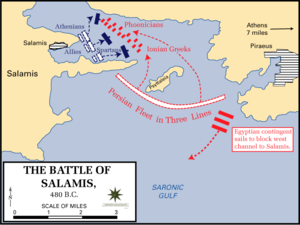
The damage to the Parthenon accumulated across 2,500 years from multiple sources. The Persians destroyed the original pre-Parthenon temple in 480 BC, the same invasion that Themistocles defeated at Salamis. The building survived largely intact through the classical period, serving successively as a Christian church and then an Ottoman mosque. The catastrophic moment came in 1687 when Venetian general Francesco Morosini bombarded the Acropolis, the Ottomans had been storing gunpowder inside the Parthenon. The explosion destroyed the interior and collapsed 14 columns. Then, between 1801 and 1812, Lord Elgin removed half the surviving frieze sculptures to London, where they remain in the British Museum today.
The Turks’ destruction of 500 stones to extract lead for bullets, as Professor Manolis Korres described, happening within a single month in 1822, was perhaps the most devastating single episode. ‘Nobody wanted the stones; they wanted the lead,’ Korres said. The 360 original stones being repositioned in the current restoration are the survivors of that episode
The 1975 Rescue Operation — Where Modern Restoration Began
The restoration that began under engineer Nikolaos Balanos between 1922 and 1933, intended to help, caused significant additional damage. Iron clamps used to join marble blocks expanded as they rusted, cracking the stone from within. Much of the current restoration program involves removing these iron clamps and replacing them with titanium, a metal that does not corrode or expand. In a remarkable irony, restorers have spent decades fixing the damage caused by previous restoration attempts.
The 2019 Turning Point — Restoring the Cella
The 2019 decision marked a profound shift in restoration philosophy. For decades, the approach had been purely conservative, stabilising what existed without attempting reconstruction. The new program goes further: partially restoring the cella, the sacred inner chamber that once housed Pheidias’ colossal 12-metre ivory and gold statue of Athena.
The statue itself is lost, destroyed sometime in late antiquity. But the walls of the chamber can be partially restored using the 360 original stones that have been catalogued, cleaned, and prepared over decades of painstaking archaeological work. Each stone has been recorded, measured, and assigned its precise original position, like pieces of a colossal three-dimensional puzzle assembled over 40 years.
Pheidias and the Statue of Athena — What the Cella Once Contained
The statue Pheidias created, Athena Parthenos, stood 12 metres tall, constructed of ivory and gold over a wooden core. The gold alone weighed approximately 44 talents, over a ton of pure gold. Pericles insisted that the gold be applied in removable sections so it could be audited at any time, and Pheidias designed it exactly that way to prove his integrity.
When Pheidias left Athens for Olympia after the accusations, he created his second masterpiece, the 13-metre statue of Zeus at Olympia, one of the Seven Wonders of the Ancient World. The man who created perhaps the two greatest sculptures in antiquity died, according to some ancient sources, in an Athenian prison on other charges. The genius who gave the Parthenon its soul never saw his work celebrated as it deserved.

The 2025-2026 Final Phase — What Is Happening Right Now
On October 12, 2025, something extraordinary happened on the Athens skyline. For the first time in 200 years, the Parthenon stood completely free of exterior scaffolding. Greek residents and tourists witnessed the marble temple as it had not been seen since the early 19th century, the columns of the western façade fully visible against the Attic sky.
The moment was brief. Within weeks, lighter and less intrusive scaffolding was reinstalled for the final phase of work on the western façade. But the glimpse it offered was historic, and Minister of Culture Lina Mendoni made a promise: “This work will not remain for long, only until the end of spring, at most the summer of 2026. At that time, the Parthenon will be fully freed from these scaffolds”.
What Visitors See Today at the Acropolis
Visiting the Acropolis in 2026 means witnessing the Parthenon at a genuinely historic moment. The lighter scaffolding currently in place on the western façade is significantly less intrusive than the heavy iron structures that surrounded the temple for decades. From most angles, the Parthenon is now visible in near-complete form, with the columns, the pediments, and the surviving frieze sections.
The restoration workers themselves are part of the experience. On most weekdays, you can see the team of engineers, archaeologists, conservators, and marble craftsmen at work, some 200 highly specialised staff continuing the painstaking process of fitting 2,500-year-old stones back to their original positions. There is no other archaeological site in the world where you can watch this quality of restoration work in real time.
The southeast entrance to the Acropolis at the Theatre of Dionysus, address Mitsaion 25, offers a quieter approach than the main entrance and brings you past the birthplace of Western theatre before ascending to the Parthenon. This is the entrance local guides recommend.
Visit the Parthenon with a Local Guide
The Parthenon’s restoration is a story that takes 2,500 years to tell properly, from Pericles commissioning Pheidias in 447 BC, through Persian destruction, Christian conversion, Ottoman occupation, Venetian bombardment, Elgin’s removal of the sculptures, and 50 years of modern scientific restoration nearing its conclusion in 2026.
Walking through the Acropolis with a local guide who understands this complete story transforms what might otherwise be a confusing collection of ruins and scaffolding into one of the most moving experiences in the world. Our private Acropolis tours bring every layer of this history to life, connecting the ancient builders to the modern restorers working there today.
This summer, as the final scaffolding comes down, it is the most meaningful moment in decades to visit the Parthenon.

Is the Parthenon still under scaffolding in 2026?
Yes — lighter scaffolding is currently in place on the western façade for the final phase of restoration work. This is significantly less intrusive than previous scaffolding structures. The exterior restoration is expected to be completed by summer 2026, after which the Parthenon will stand completely free of scaffolding for the first time in 200 years. The moment in October 2025 when scaffolding was briefly removed gave visitors a rare preview of how the completed temple will look.
When will the Parthenon restoration be finished?
The exterior restoration phase is expected to conclude by summer 2026 — marking the end of a program that began in 1975. However, a parallel interior restoration of the cella, the sacred chamber that once housed the statue of Athena, is projected to take approximately 15 more years. So while the exterior will be complete this summer, conservation work on the interior will continue for decades.
How long has the Parthenon been under restoration?
The current scientific restoration program began in 1975, making it over 50 years of continuous work. This is more than three times longer than it took the ancient Athenians to build the Parthenon originally, 15 years from 447 to 432 BC. Earlier restoration attempts were made in the 1830s and 1920s-30s, but the iron clamps used in those interventions caused additional damage that the current program has spent decades correcting.
Why is the Parthenon being restored?
The Parthenon has suffered damage from multiple sources across 2,500 years, Persian invasion in 480 BC, a catastrophic Venetian bombardment in 1687 that exploded stored gunpowder and collapsed 14 columns, Lord Elgin’s removal of sculptures in 1801-12, Ottoman soldiers breaking stones for lead bullets in 1822, and previous restoration attempts in the 1930s that used iron clamps which expanded and cracked the marble. The current restoration aims to correct all these layers of damage using titanium fixtures and Pentelic marble from the original quarry area
What marble is used in the Parthenon restoration
Restorers use Pentelic marble from Mount Pentelikon, the same white marble quarried 17 kilometres from Athens that the ancient builders used. New marble comes from the Dionysos quarry in the same area. Each new piece is carefully shaped to match the original, joined with titanium rods rather than the iron that damaged previous restorations. The 90 new blocks being carved for the current phase are virtually indistinguishable from the 2,500-year-old originals surrounding them.
Can I visit the Parthenon during restoration?
Yes, the Acropolis and Parthenon remain fully open to visitors throughout the restoration. The current lighter scaffolding on the western façade is far less intrusive than previous structures. In fact, visiting now offers something unique: you can watch the restoration team at work, see the ancient stones being fitted back to their original positions, and witness the Parthenon at the most significant moment in its modern history. Our private Acropolis tours explain the complete restoration story in depth.
What was inside the Parthenon originally?
The Parthenon’s inner chamber, the cella, housed one of the ancient world’s greatest treasures: a 12-metre statue of Athena created by Pheidias, constructed of ivory and gold over a wooden frame. The gold alone weighed over a ton. The statue was removed in late antiquity and is now lost. The current restoration project is partially rebuilding the cella walls that once surrounded it, the first time in centuries that the sacred inner space of the Parthenon will be partially restored. It has taken longer than it took the ancient Athenians to build the Parthenon in the first place, 15 years of original construction from 447 to 432 BC, versus 50 years of modern restoration and counting.
Why the Parthenon Needed Saving — A History of Damage
The damage to the Parthenon accumulated across 2,500 years from multiple sources. The Persians destroyed the original pre-Parthenon temple in 480 BC, the same invasion that Themistocles defeated at Salamis. The building survived largely intact through the classical period, serving successively as a Christian church and then an Ottoman mosque. The catastrophic moment came in 1687 when Venetian general Francesco Morosini bombarded the Acropolis, the Ottomans had been storing gunpowder inside the Parthenon. The explosion destroyed the interior and collapsed 14 columns. Then, between 1801 and 1812, Lord Elgin removed half the surviving frieze sculptures to London, where they remain in the British Museum today.
The Turks’ destruction of 500 stones to extract lead for bullets, as Professor Manolis Korres described, happening within a single month in 1822, was perhaps the most devastating single episode. ‘Nobody wanted the stones; they wanted the lead,’ Korres said. The 360 original stones being repositioned in the current restoration are the survivors of that episode
The 1975 Rescue Operation — Where Modern Restoration Began
The restoration that began under engineer Nikolaos Balanos between 1922 and 1933, intended to help, caused significant additional damage. Iron clamps used to join marble blocks expanded as they rusted, cracking the stone from within. Much of the current restoration program involves removing these iron clamps and replacing them with titanium, a metal that does not corrode or expand. In a remarkable irony, restorers have spent decades fixing the damage caused by previous restoration attempts.
The 2019 Turning Point — Restoring the Cella
The 2019 decision marked a profound shift in restoration philosophy. For decades, the approach had been purely conservative, stabilising what existed without attempting reconstruction. The new program goes further: partially restoring the cella, the sacred inner chamber that once housed Pheidias’ colossal 12-metre ivory and gold statue of Athena.
The statue itself is lost, destroyed sometime in late antiquity. But the walls of the chamber can be partially restored using the 360 original stones that have been catalogued, cleaned, and prepared over decades of painstaking archaeological work. Each stone has been recorded, measured, and assigned its precise original position, like pieces of a colossal three-dimensional puzzle assembled over 40 years.
Pheidias and the Statue of Athena — What the Cella Once Contained
The statue Pheidias created, Athena Parthenos, stood 12 metres tall, constructed of ivory and gold over a wooden core. The gold alone weighed approximately 44 talents, over a ton of pure gold. Pericles insisted that the gold be applied in removable sections so it could be audited at any time, and Pheidias designed it exactly that way to prove his integrity.
When Pheidias left Athens for Olympia after the accusations, he created his second masterpiece, the 13-metre statue of Zeus at Olympia, one of the Seven Wonders of the Ancient World. The man who created perhaps the two greatest sculptures in antiquity died, according to some ancient sources, in an Athenian prison on other charges. The genius who gave the Parthenon its soul never saw his work celebrated as it deserved.
The 2025-2026 Final Phase — What Is Happening Right Now
On October 12, 2025, something extraordinary happened on the Athens skyline. For the first time in 200 years, the Parthenon stood completely free of exterior scaffolding. Greek residents and tourists witnessed the marble temple as it had not been seen since the early 19th century, the columns of the western façade fully visible against the Attic sky.
The moment was brief. Within weeks, lighter and less intrusive scaffolding was reinstalled for the final phase of work on the western façade. But the glimpse it offered was historic, and Minister of Culture Lina Mendoni made a promise: “This work will not remain for long, only until the end of spring, at most the summer of 2026. At that time, the Parthenon will be fully freed from these scaffolds”.
What Visitors See Today at the Acropolis
Visiting the Acropolis in 2026 means witnessing the Parthenon at a genuinely historic moment. The lighter scaffolding currently in place on the western façade is significantly less intrusive than the heavy iron structures that surrounded the temple for decades. From most angles, the Parthenon is now visible in near-complete form, with the columns, the pediments, and the surviving frieze sections.
The restoration workers themselves are part of the experience. On most weekdays, you can see the team of engineers, archaeologists, conservators, and marble craftsmen at work, some 200 highly specialised staff continuing the painstaking process of fitting 2,500-year-old stones back to their original positions. There is no other archaeological site in the world where you can watch this quality of restoration work in real time.
The southeast entrance to the Acropolis at the Theatre of Dionysus, address Mitsaion 25, offers a quieter approach than the main entrance and brings you past the birthplace of Western theatre before ascending to the Parthenon. This is the entrance local guides recommend.
Visit the Parthenon with a Local Guide
The Parthenon’s restoration is a story that takes 2,500 years to tell properly, from Pericles commissioning Pheidias in 447 BC, through Persian destruction, Christian conversion, Ottoman occupation, Venetian bombardment, Elgin’s removal of the sculptures, and 50 years of modern scientific restoration nearing its conclusion in 2026.
Walking through the Acropolis with a local guide who understands this complete story transforms what might otherwise be a confusing collection of ruins and scaffolding into one of the most moving experiences in the world. Our private Acropolis tours bring every layer of this history to life, connecting the ancient builders to the modern restorers working there today.
This summer, as the final scaffolding comes down, it is the most meaningful moment in decades to visit the Parthenon.


Is the Parthenon still under scaffolding in 2026?
Yes — lighter scaffolding is currently in place on the western façade for the final phase of restoration work. This is significantly less intrusive than previous scaffolding structures. The exterior restoration is expected to be completed by summer 2026, after which the Parthenon will stand completely free of scaffolding for the first time in 200 years. The moment in October 2025 when scaffolding was briefly removed gave visitors a rare preview of how the completed temple will look.
When will the Parthenon restoration be finished?
The exterior restoration phase is expected to conclude by summer 2026 — marking the end of a program that began in 1975. However, a parallel interior restoration of the cella, the sacred chamber that once housed the statue of Athena, is projected to take approximately 15 more years. So while the exterior will be complete this summer, conservation work on the interior will continue for decades.
How long has the Parthenon been under restoration?
The current scientific restoration program began in 1975, making it over 50 years of continuous work. This is more than three times longer than it took the ancient Athenians to build the Parthenon originally, 15 years from 447 to 432 BC. Earlier restoration attempts were made in the 1830s and 1920s-30s, but the iron clamps used in those interventions caused additional damage that the current program has spent decades correcting.
Why is the Parthenon being restored?
The Parthenon has suffered damage from multiple sources across 2,500 years, Persian invasion in 480 BC, a catastrophic Venetian bombardment in 1687 that exploded stored gunpowder and collapsed 14 columns, Lord Elgin’s removal of sculptures in 1801-12, Ottoman soldiers breaking stones for lead bullets in 1822, and previous restoration attempts in the 1930s that used iron clamps which expanded and cracked the marble. The current restoration aims to correct all these layers of damage using titanium fixtures and Pentelic marble from the original quarry area
What marble is used in the Parthenon restoration
Restorers use Pentelic marble from Mount Pentelikon, the same white marble quarried 17 kilometres from Athens that the ancient builders used. New marble comes from the Dionysos quarry in the same area. Each new piece is carefully shaped to match the original, joined with titanium rods rather than the iron that damaged previous restorations. The 90 new blocks being carved for the current phase are virtually indistinguishable from the 2,500-year-old originals surrounding them.
Can I visit the Parthenon during restoration?
Yes, the Acropolis and Parthenon remain fully open to visitors throughout the restoration. The current lighter scaffolding on the western façade is far less intrusive than previous structures. In fact, visiting now offers something unique: you can watch the restoration team at work, see the ancient stones being fitted back to their original positions, and witness the Parthenon at the most significant moment in its modern history. Our private Acropolis tours explain the complete restoration story in depth.
What was inside the Parthenon originally?
The Parthenon’s inner chamber, the cella, housed one of the ancient world’s greatest treasures: a 12-metre statue of Athena created by Pheidias, constructed of ivory and gold over a wooden frame. The gold alone weighed over a ton. The statue was removed in late antiquity and is now lost. The current restoration project is partially rebuilding the cella walls that once surrounded it, the first time in centuries that the sacred inner space of the Parthenon will be partially restored